Witchland, a world of Tudor fashion and Regency splendour.
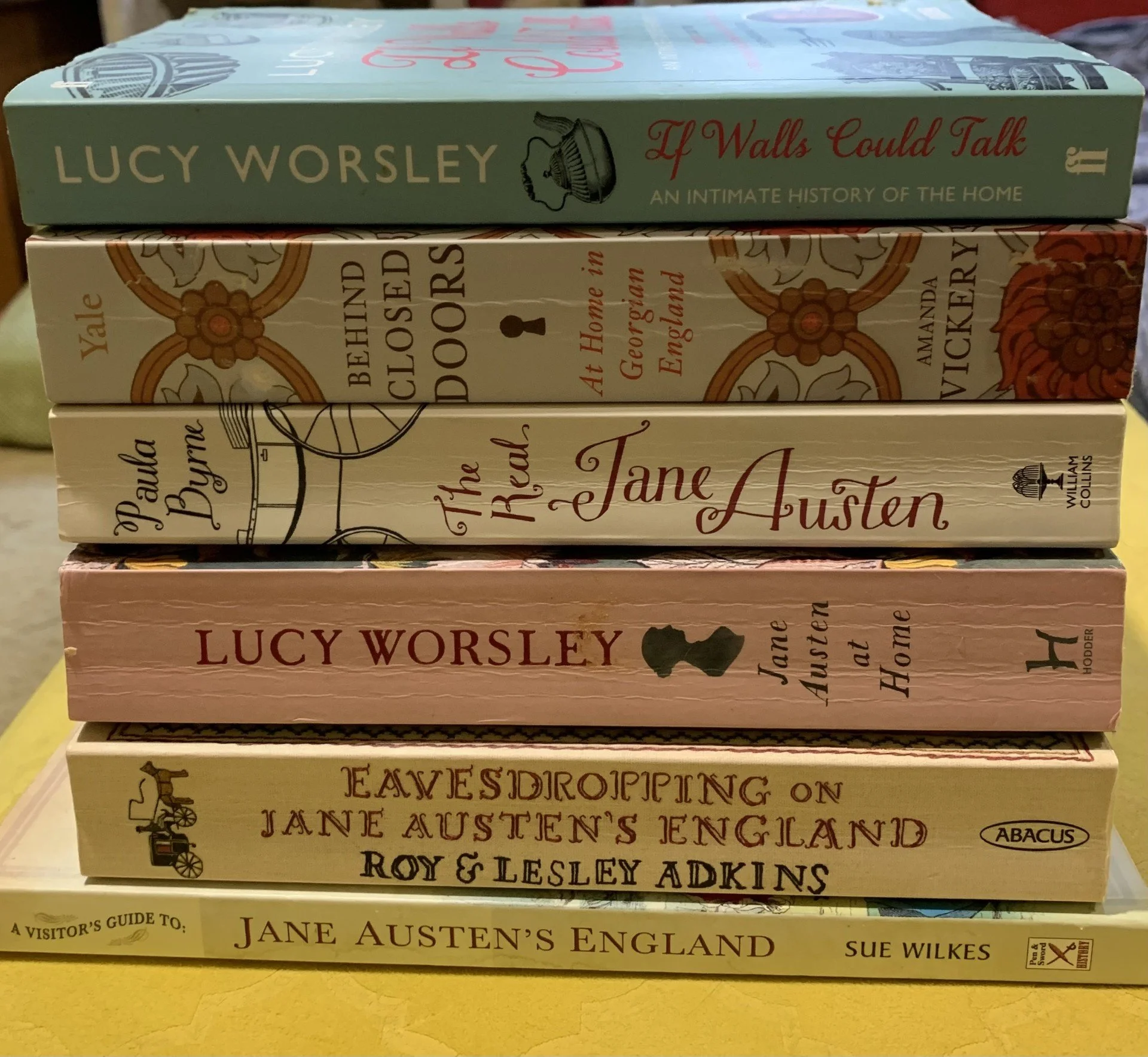
Some of the books I read whilst researching Regency life .
WITCHLAND began with the idea of a reverse-gender ‘Pride and Prejudice,’ so the setting had to be Regency. At first, that daunted me. Whilst I loved the books and enjoyed Jane Austen adaptations, I didn’t know much about everyday life in that era. All my novels before WITCHLAND were secondary world Fantasy, so I was used to creating my settings from scratch.
With WITCHLAND, the world needed to feel grounded in the reality of the Regency period. When I first started writing it, every scene felt like a struggle. How could I describe Eliza pacing around a room, when I didn’t know what furniture was likely to be in there? Were sofas called sofas? That word sounded modern to me, but it turned out it was used back then.
I soon realised I needed to do some research. I stopped writing and started reading history books, focusing on domestic details, learning as much as I could about how people lived. What they ate, how they travelled, the etiquette of introductions, the fashion. It was fascinating, sometimes horrifying. Some details made it into the book, like the cheaper wallpaper in the Darsyns’ cottage. Others just helped me understand the world.
All the time, I was thinking about the timeline change after the Witch Rising, centuries before. What changes would the witches make after they seized power? Some of these are mentioned when Eliza and Will have their first spirited argument. Eliza talks of how women no longer die young, worn out by constant pregnancies. Every district has hospitals where Lesser Witches (non-aristocratic, less powerful witches) work, and the implication is that all women are welcome to get contraceptive charms from them. Eliza speaks proudly of how every child born to Witchland is loved and wanted. I couldn’t go into that level of detail without slowing the story down, but I enjoyed building the world.
The Regency-Tudor fusion came from the Witch Rising itself, because the catalyst for seizing power came from the witches’ determination to rescue Queen Anne Boleyn (who really was a witch in this timeline) from execution. Eliza’s ancestors fought their way into the Tower of London to rescue their queen, whilst their ally Lord Morgan Le Fae arrested King Henry the Eighth. I felt it would be very fitting for elements of Tudor culture to survive into Regency times, so some of the popular songs and dances are Tudor ones. Tudor fashion is worn, on occasion, to honour the witches’ ancestors, and at some events Eliza wears a Regency gown with long draping Tudor sleeves. The Boleyn – a descendant of Queen Anne – still cherishes and wears the famed ‘B’ pearl necklace, and enjoys listening to songs composed by her illustrious ancestor.
I had great fun figuring out the WITCHLAND world. More details will come to light as I write the next books in this series.